
Freight Capacity vs Demand: The Hidden Timing Factor Disrupting Logistics
Freight capacity vs demand is one of the most important factors in logistics. When these two fall out of balance, it can lead to delays, increased costs, and operational disruptions.
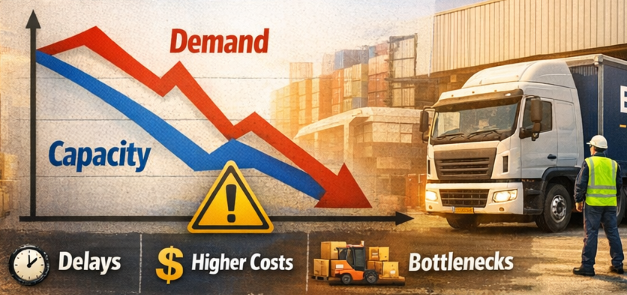
Behind every delivery is a balance between freight capacity (the space available to move goods) and freight demand (the volume of goods that need to be moved). When these two are aligned, operations run smoothly. But when they fall out of sync, delays, increased costs, and disruptions can follow.
Understanding this balance is key to building a more efficient and resilient supply chain.
What is Freight Capacity?
Freight capacity refers to the availability of resources needed to move goods — including trucks, drivers, warehouse space, and shipping slots.
Capacity is not fixed. It fluctuates based on factors such as:
- seasonal demand
- port congestion
- equipment availability
- labour constraints
When capacity is limited, moving freight becomes more challenging.
What Drives Freight Demand?
Freight demand is influenced by how much product businesses need to move at any given time.
This can spike due to:
- peak retail seasons
- promotional periods
- supply chain disruptions
- sudden increases in customer demand
When demand rises faster than capacity, pressure builds across the entire logistics network.
When Demand Exceeds Capacity
When there is more freight than available capacity, several challenges can arise:
- Longer lead times
- Higher transport costs
- Delays in dispatch and delivery
- Increased strain on warehouse operations
This is often seen during peak seasons, where even small inefficiencies can create significant bottlenecks.
Why Timing is Critical
Planning ahead allows businesses to secure capacity before demand peaks.
By forecasting shipment volumes and aligning them with available transport and warehouse resources, companies can avoid last-minute disruptions.
Good timing helps:
- maintain consistent delivery schedules
- reduce operational stress
- improve overall supply chain reliability
A More Proactive Approach to Logistics
Rather than reacting to delays, businesses benefit from taking a proactive approach — planning shipments early, communicating with logistics partners, and allowing flexibility where needed.
In logistics, it’s not just about moving goods — it’s about moving them at the right time.
At Brisbane Logistics, careful planning and coordination help balance capacity and demand, keeping freight moving even during busy periods.
At Brisbane Logistics, we understand that timing is critical to keeping your operations moving. Our team works closely with partners to ensure capacity is secured when you need it most.
For reliable and efficient freight forwarding solutions, we also recommend Kenter, a trusted partner in delivering seamless logistics support.
